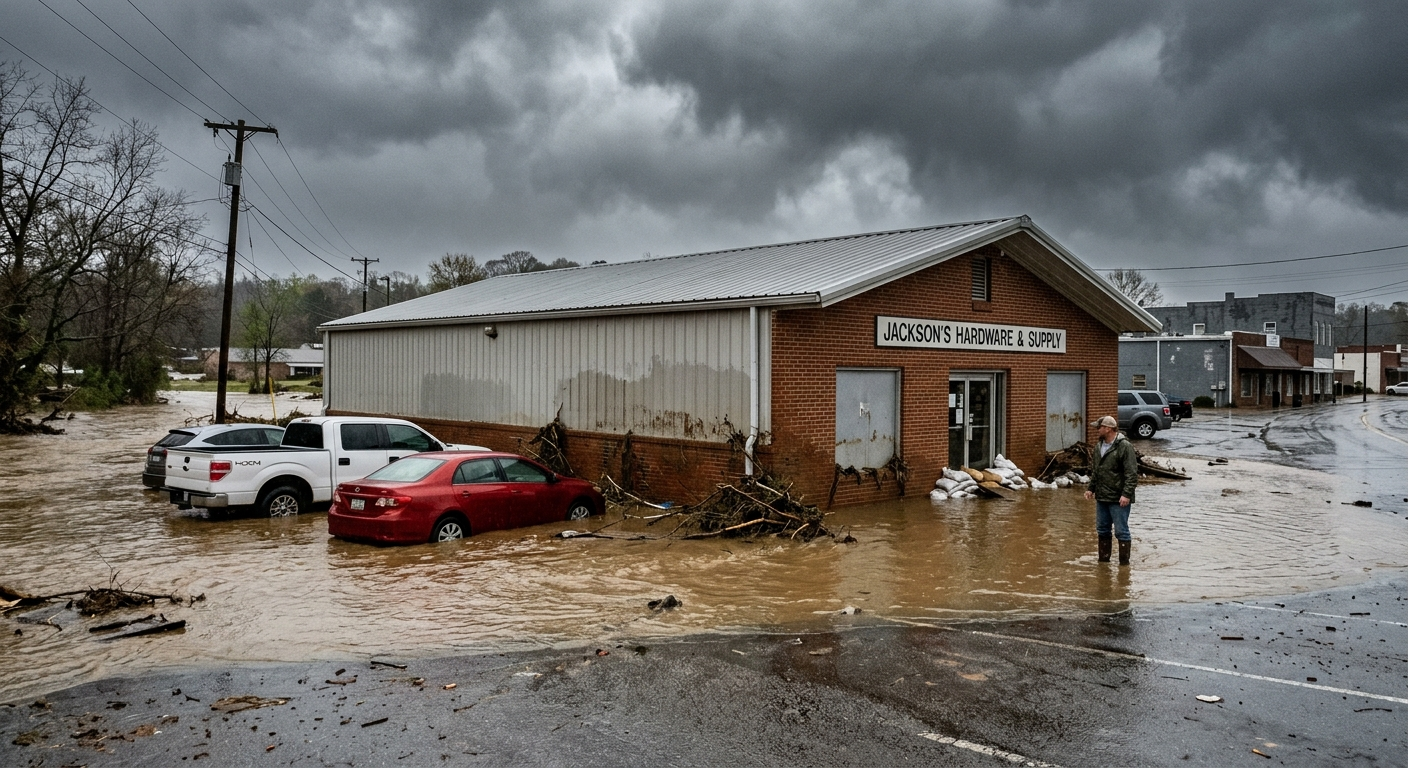


Flood insurance in Alabama: why your homeowners policy leaves you exposed
Flood insurance in Alabama is one of the most misunderstood and most skipped coverages in the state, and that gap costs homeowners dearly every year. Standard homeowners policies do not cover flood damage, period. When a slow-moving storm stalls over the Tennessee Valley, when the Tennessee River backs up, or when a flash flood rolls through a neighborhood in Decatur or Cullman, the damage to your floors, walls, and personal belongings falls entirely on you unless you have a separate flood policy. Understanding the difference between the National Flood Insurance Program (NFIP) and private flood insurance is the first step toward making sure you are actually protected.
How the NFIP works and who it is designed for
The National Flood Insurance Program is a federally backed program administered by FEMA. It was created in 1968 specifically because private insurers had largely stopped writing flood coverage after repeated, catastrophic losses. Today the NFIP provides flood insurance to property owners, renters, and businesses through participating communities, and most Alabama counties and municipalities participate.
NFIP coverage limits and what they include
For a residential property, the NFIP caps building coverage at $250,000 and contents coverage at $100,000 . Those limits have not changed in years, which means a newer or larger home in Madison or Huntsville can easily be underinsured at those ceilings. A standard NFIP policy typically covers:
- Building coverage: the structure itself, foundation, electrical and plumbing systems, HVAC equipment, built-in appliances, and permanently installed flooring and cabinets.
- Contents coverage: clothing, furniture, electronics, washers and dryers, and portable appliances. This must be purchased separately from building coverage.
What the NFIP does not cover is equally important: temporary living expenses while your home is repaired, damage to decks and patios, landscaping, vehicles, or anything stored in a basement (with narrow exceptions). There is also a standard 30-day waiting period before an NFIP policy takes effect, so buying coverage the week before a named storm is already too late.
When the NFIP is required
If you have a federally backed mortgage and your property sits in a Special Flood Hazard Area (SFHA), the official "100-year floodplain" shown on FEMA flood maps, your lender is legally required to mandate NFIP or equivalent flood coverage. Many Alabama homeowners in Hartselle, Athens, and along the Flint Creek and Flint River corridors fall into this category.
Private flood insurance: what it offers beyond the NFIP
Private flood insurance has expanded significantly since Congress passed the Biggert-Waters Act and subsequent reforms that encouraged private market participation. Today a number of carriers write standalone private flood policies in Alabama, and for many homeowners the private market is worth a close look.
Higher coverage limits
Private insurers are not bound by the NFIP's $250,000 / $100,000 caps. If your home is insured for replacement cost at $450,000, a private policy can match that. This matters for newer construction in growing communities like Madison and Priceville, where home values frequently exceed NFIP building limits.
Broader coverage options
Private flood policies frequently include coverages the NFIP excludes entirely:
- Loss of use / additional living expenses: hotel and rental costs while your home is uninhabitable, which can run several thousand dollars a month.
- Other structures: detached garages, fencing, and outbuildings that the NFIP either excludes or limits severely.
- Pool repair and landscaping: minor items, but real costs that add up after a flood event.
- Replacement cost value on contents: the NFIP pays actual cash value for personal property, meaning depreciation is deducted. Many private policies pay full replacement cost.
Shorter waiting periods
Some private flood carriers offer waiting periods as short as 10 to 14 days , compared to the NFIP's standard 30 days. That flexibility can matter in late spring when Alabama's severe weather season ramps up quickly.
Potential savings
Private flood premiums are priced using more granular risk modeling than the NFIP's older actuarial tables. For a home with favorable elevation, solid construction, and no prior claims, a private policy can come in meaningfully cheaper than the NFIP equivalent. The reverse can also be true for high-risk properties, so it is worth comparing both options side by side.
Alabama-specific flood risk: it is not just coastal
Many Alabamians assume flood risk is a Gulf Coast problem. That assumption leads to serious coverage gaps in north and central Alabama. The Tennessee Valley Authority manages a large network of dams and reservoirs across the region, including Guntersville Lake, Wheeler Lake, and Wilson Lake. Heavy rainfall events can stress those systems and push water into areas that rarely flood in dry years. FEMA's flood maps are also updated on a rolling basis, and properties that were outside a floodplain a decade ago may now carry moderate or high risk ratings after new mapping.
Flash flooding is another persistent hazard across north Alabama's hilly terrain. Unlike river flooding, which builds slowly over days, flash floods can arrive in under an hour. Communities in Morgan County, Lawrence County, and Cullman County have all experienced damaging flash flood events in recent years. The National Weather Service frequently issues flash flood watches for these areas during spring storm season and again in the fall.
One more overlooked data point: FEMA consistently reports that about 20 to 25% of all flood claims come from properties outside designated high-risk flood zones. If you are in a moderate- or low-risk zone, you still face real exposure, and flood coverage is generally less expensive in those zones precisely because risk is lower.
For a broader look at the coverage gaps Alabama homeowners face, the post on Alabama homeowners insurance coverage gaps covers several related blind spots worth reviewing.
NFIP vs. private flood: a direct comparison
The following summary of key differences can help you think through which option fits your situation:
- Coverage limits: NFIP caps at $250,000 building / $100,000 contents. Private carriers can match your home's full insured value.
- Loss of use: NFIP does not include additional living expenses. Many private policies do.
- Contents settlement: NFIP pays actual cash value (depreciated). Private policies often pay replacement cost.
- Waiting period: NFIP is 30 days standard. Private options range from 10 to 30 days depending on the carrier.
- Basement coverage: NFIP is very limited for finished basements. Private coverage varies by policy but is often broader.
- Lender acceptance: NFIP is universally accepted. Private policies are accepted by most lenders, but confirm with your lender before switching.
- Premium pricing: NFIP uses FEMA's Risk Rating 2.0 model since 2021. Private pricing can be lower for low-to-moderate risk properties.
- Claims process: NFIP claims go through Write Your Own (WYO) carriers or FEMA directly. Private claims follow standard carrier procedures.
Who should consider each option
There is no universal right answer. The better choice depends on your home's value, your location, your lender's requirements, and how much residual risk you are comfortable carrying.
The NFIP is likely the better fit if:
- Your home's insured value is at or below $250,000: you will not outgrow the NFIP's building limit, and pricing may be competitive.
- Your lender requires a federally backed policy: verify this with your lender before buying private coverage as a replacement.
- Private insurers rate your property as high-risk: the NFIP is sometimes the only affordable option for properties in designated floodways or with prior losses.
Private flood insurance is worth serious consideration if:
- Your home is worth more than $250,000: the NFIP limit will leave a large gap between what you owe and what you can recover.
- You want loss-of-use coverage: displacement costs after a flood event can exceed $2,000 to $3,000 per month, and the NFIP does not address that.
- You are in a low-to-moderate risk zone: private pricing for these properties is often competitive, and you get broader coverage for a similar or lower premium.
- You want replacement cost on your belongings: actual cash value settlements can leave a real shortfall, especially on furniture and electronics that depreciate quickly.
Some homeowners in flood-prone areas layer both: an NFIP policy up to its limits, and a private "excess flood" policy above that threshold. This approach is common for higher-value homes near river corridors in the Tennessee Valley.
What flood insurance does not cover (regardless of which policy you choose)
Both NFIP and most private flood policies share some exclusions that catch people off guard after a loss. Knowing these ahead of time helps you decide whether other coverages belong in your plan:
- Sewer and drain backup: water that backs up through a sewer or drain into your home is typically excluded from flood policies. This coverage is usually added as an endorsement to your homeowners policy.
- Vehicles: cars swept away in a flood are not covered by a flood policy. That falls under comprehensive auto coverage on your personal auto policy.
- Cash, precious metals, and most valuables: these require separate scheduled coverage. See your agent about a jewelry or valuables policy if this applies to you.
- Business income losses: if you operate a business from home and a flood shuts down your operations, flood insurance will not replace that income. Commercial policies handle that differently.
- Damage from moisture, mildew, or mold that you could have prevented: both FEMA and private carriers can deny claims if a homeowner failed to take reasonable steps to prevent ongoing damage after the initial flood event.
Get flood coverage guidance from Akin and Associates
Deciding whether the NFIP or a private flood policy is the right fit for your home is not something you should have to sort out alone. At Akin and Associates , we are an independent insurance agency serving north Alabama, including Decatur, Hartselle, Huntsville, Cullman, and the surrounding communities. Because we work with multiple carriers, we can compare NFIP options alongside private flood programs and show you what each actually covers, not just what it costs.
Flood losses are expensive and stressful. The right policy, purchased before the rain starts, makes the difference between a manageable recovery and a financial setback that takes years to overcome. Call us at (256) 355-8500 or reach out through our contact page to start a conversation about your flood insurance options. We will look at your property, your existing homeowners coverage, and your risk level and help you build a plan that actually protects what you have built.