

General liability insurance for Alabama contractors: what you need to know
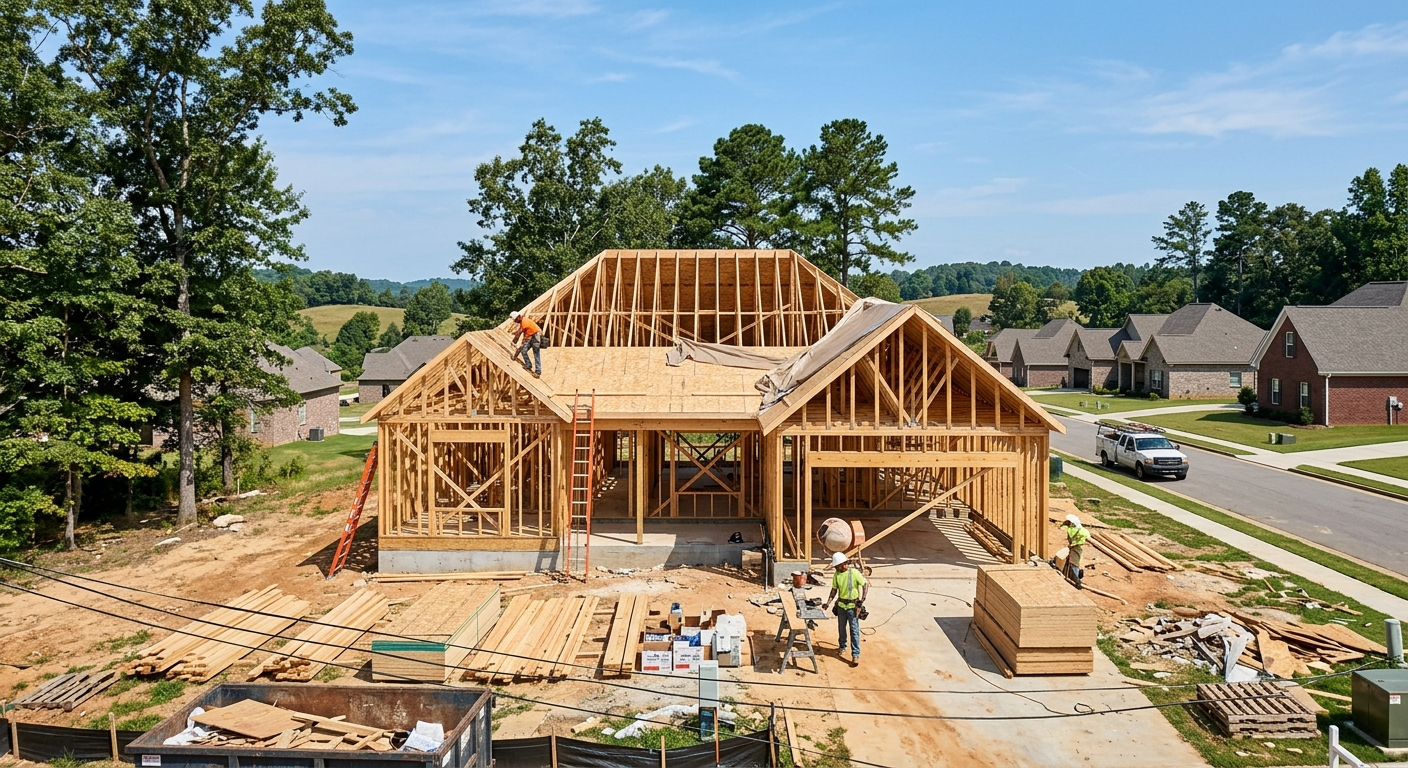
If you run a contracting business in Alabama, general liability insurance for Alabama contractors is one of the first things a property owner, general contractor, or city permit office will ask about before you set foot on a job site. It protects your business when third parties claim bodily injury or property damage because of your work, and without it, a single lawsuit can wipe out everything you have built. This post covers what the coverage actually does, what Alabama contractors are legally and practically required to carry, what it costs, and what to watch for when you shop.
What general liability insurance covers for contractors
General liability (GL) is not a catch-all policy, but it covers the scenarios that come up most often on construction and trade jobs. Knowing what is and is not included keeps you from having a false sense of security on the job site.
Third-party bodily injury
If a homeowner, visitor, or passerby is injured because of your operations, a GL policy pays for their medical bills, lost wages, and legal defense costs if they sue. A customer tripping over your equipment in a driveway, or a child wandering into an unsecured work area, are real examples that trigger this coverage.
Third-party property damage
You or one of your workers accidentally puts a nail through a water line, a subcontractor's crew cracks a neighbor's foundation, or a piece of heavy equipment rolls and dents a parked vehicle. GL covers the cost to repair or replace the damaged property.
Completed-operations liability
This is the coverage most contractors overlook. Once a job is finished and you have been paid, your liability does not end. If a deck you built collapses six months later and injures someone, completed-operations coverage (a standard part of most GL policies) steps in. Alabama has a six-year statute of limitations for most construction defect claims, so this tail matters.
Personal and advertising injury
If a competitor accuses you of using their copyrighted marketing material, or a customer claims you defamed them in an online review response, this portion of the policy responds. It is less common on job sites but still part of the standard GL form.
What GL does not cover
- Your own tools and equipment: damaged or stolen tools need an inland marine or equipment floater policy.
- Employee injuries: those fall under workers compensation, which is a separate Alabama requirement.
- Professional errors: design-build contractors and architects need professional liability (E&O) coverage for faulty plans or advice.
- Your vehicles: commercial auto covers trucks and vans; GL does not.
- Intentional acts: no policy pays for deliberate damage.
Alabama licensing and insurance requirements for contractors
Alabama does not have a single statewide general contractor license that covers everyone, but the requirements that do exist have real teeth.
Alabama Licensing Board for General Contractors
Any contractor working on a project valued at $50,000 or more must hold a license from the Alabama Licensing Board for General Contractors (ALBGC). To obtain or renew that license, you must demonstrate financial solvency and carry adequate insurance. The ALBGC does not publish a single minimum GL dollar amount for all license classes, but most applications require proof of at least $500,000 per occurrence in general liability. Specialty trades and higher license classifications routinely require more.
Specialty trade licenses
Electricians, plumbers, HVAC technicians, and other specialty trades in Alabama are regulated at the state level through separate boards, and each board sets its own insurance minimums. The Alabama Electrical Contractors Board, for instance, requires proof of GL before issuing or renewing a license. Check with your specific licensing board for the exact figures.
Local permit and municipal requirements
Cities like Huntsville, Decatur, and Cullman often layer additional insurance requirements on top of state minimums when you pull a building permit. Decatur, for example, has historically required contractors to show a certificate of insurance naming the city as an additional insured before issuing commercial permits. Always call the local building department before starting work rather than assuming your existing limits are sufficient.
Client and general contractor requirements
Even when no government body requires a specific limit, the GC or property owner almost always will. Commercial clients in North Alabama regularly require subcontractors to carry $1 million per occurrence and $2 million aggregate in GL, and many large commercial developers require $2 million per occurrence. Some contracts also require you to name the owner or GC as an additional insured, which is a free or low-cost endorsement you can add to your policy.
How much does general liability insurance cost for Alabama contractors
The honest answer: it varies, but here are real benchmarks to anchor your expectations.
A sole-proprietor handyman or small residential remodeler in Alabama with under $500,000 in annual revenue typically pays somewhere between $800 and $2,000 per year for a $1 million / $2 million GL policy. A mid-size framing or roofing crew with $1-3 million in revenue and several employees might pay $3,000 to $8,000 per year . Roofing, demolition, and structural steel work sit at the top of the pricing table because the risk of serious injury or property damage is higher. Painting, finish carpentry, and flooring tend to be at the lower end.
Factors that move your premium
- Trade classification: roofing and structural work cost more to insure than interior finish trades.
- Annual payroll and revenue: carriers use these as a measure of exposure; more work means more chances for a claim.
- Claims history: a clean loss history is worth real money at renewal. Even one paid claim can push your rate up 20-40%.
- Policy limits: stepping from $1 million to $2 million per occurrence is often a modest bump, typically 10-20% more premium.
- Deductibles: a higher deductible lowers the premium but means you absorb more of a smaller claim yourself.
- Additional endorsements: blanket additional insured, primary and non-contributory wording, and waiver of subrogation endorsements add a little cost but are often contract requirements.
The best way to know your actual number is to get quotes from multiple carriers. Rates differ significantly between insurance companies for the same contractor profile, so working with an independent agency that shops the market for you almost always beats going direct to a single carrier.
Workers compensation and how it fits with general liability
These two policies work as a pair. Alabama workers compensation requirements apply once you have five or more employees (with some exceptions for farm laborers and domestic workers). Even if you have fewer than five employees, carrying workers comp is a sound practice, and many commercial clients require it regardless of your headcount.
The practical distinction: GL covers injuries to people who are not your employees. Workers comp covers your employees when they are hurt on the job. A homeowner who falls over your saw horses is a GL claim. Your carpenter who cuts his hand on that same saw is a workers comp claim. Both situations happen on real job sites, often in the same week.
Alabama's workers comp system is administered through the Department of Labor. Rates are set by the NCCI classification system and vary by trade, just like GL. Framing carpenters and roofers pay higher workers comp rates than drywall finishers or tile setters. Bundling your GL and workers comp with the same carrier or through the same agency often results in better pricing and simpler administration at audit time.
Other coverages Alabama contractors should consider alongside GL
General liability is the foundation, but most contractors need additional policies to be properly protected.
Builders risk insurance
If you are the general contractor on a new build or major renovation, a builders risk policy covers the structure itself while it is under construction against fire, wind, theft, and vandalism. Your GL does not cover the building you are working on, only damage you cause to someone else's property.
Commercial auto
Your personal auto policy almost certainly excludes business use. Pickup trucks, vans, and trailers used for work need a commercial auto policy. If a crew member causes an accident driving to a job site in a company vehicle, your personal auto insurer will deny the claim.
Inland marine / tools and equipment
Theft of tools from job sites is one of the most common contractor claims in Alabama. A basic GL or commercial property policy does not cover tools stored in a van or on a job site. An inland marine floater covers them wherever they go.
Commercial umbrella
If a serious injury on one of your job sites results in a lawsuit with a verdict over your GL limit, a commercial umbrella policy picks up where GL leaves off. Umbrella limits of $1 million to $5 million are common and relatively affordable because the underlying GL absorbs routine claims.
Surety bonds
Bonds are not insurance, but they come up constantly in the contractor world. A license and permit bond, or a performance bond on a large commercial project, assures the project owner that you will complete the work. Alabama ALBGC applicants in certain license classes must post a bond as part of their licensing requirements. See the surety bonds page for more on how bonding works alongside your insurance program.
Common mistakes Alabama contractors make with general liability
Knowing what to avoid is just as useful as knowing what to buy.
- Carrying limits that are too low: a $300,000 per occurrence limit might satisfy an old municipal requirement but will leave you exposed on any serious commercial project. Medical bills and legal fees add up fast; $1 million is a practical minimum today.
- Not reading the exclusions: some GL policies exclude certain trades, certain products, or work above a set height (common in roofing policies). Read the exclusions section before you bind coverage.
- Forgetting completed operations: make sure your policy includes completed-operations coverage and that it extends far enough to cover Alabama's six-year construction defect window.
- Letting the policy lapse: a one-day gap in coverage can void a contract, cause a permit to be revoked, or leave you uninsured for a claim that happened before the lapse was caught.
- Not updating payroll and revenue: GL premiums are often based on estimated payroll or revenue with an end-of-year audit. If your business grows and you do not update your estimates, you could owe a large audit premium.
- Assuming a subcontractor's policy covers you: it does not. Your own GL policy needs to be in force. Requiring subs to name you as an additional insured is smart, but it supplements your own coverage; it does not replace it.
Get the right coverage for your contracting business in Alabama
At Akin and Associates , we are an independent insurance agency serving contractors across North Alabama, including Decatur, Huntsville, Cullman, Athens, and the surrounding communities. Because we work with multiple carriers, we can compare rates and policy terms side by side rather than directing you toward one company's product. That matters for contractors, where the difference in pricing between carriers for the same coverage can easily be $1,000 or more per year.
Whether you need a basic GL policy to pull a permit, a full contractor insurance package that includes workers comp, commercial auto, and a builders risk certificate for a large project, or help understanding what a GC is actually requiring of you in a subcontract agreement, our team can walk you through it without the jargon.
Visit our contractors insurance page to see the full range of coverages we place for trade and construction businesses, or contact us online to start a quote. You can also call us directly at (256) 355-8500 . Getting the right coverage in place before the next job starts is always easier than dealing with a gap after something goes wrong.