

Surety bonds for Alabama contractors: what you need to know
If you are a contractor working in Alabama, surety bonds are one of those requirements that can feel confusing until someone explains them plainly. A surety bond is not insurance for you. It is a financial guarantee to your clients, subcontractors, or the state that you will fulfill your obligations. When you fail to do that, the bond pays the injured party and then comes back to collect from you. Knowing which bonds Alabama requires for your trade can save you from license problems, lost contracts, and expensive claims.
How surety bonds work
Three parties are always involved in a surety bond. The principal is you, the contractor. The obligee is whoever is requiring the bond, usually a government agency or a private project owner. The surety is the bonding company that underwrites the guarantee and backs the financial promise with its own funds.
The key difference from a standard insurance policy: when an insurance claim is paid, the insurer absorbs the loss. When a surety bond claim is paid, the surety expects to be reimbursed by the principal. Bonds are a credit product as much as they are a risk product. That is why your personal credit history, business financials, and track record matter so much during underwriting.
A surety bond tells a property owner in Decatur or a county government in Cullman that if you walk off the job, use inferior materials, or leave unpaid suppliers behind, there is money set aside to make it right. That assurance is often what gets you on the approved bidder list.
Types of surety bonds Alabama contractors commonly need
The type of work you do, whether you work on public or private projects, and the license you hold all determine which bonds are required.
License and permit bonds
The Alabama Licensing Board for General Contractors (ALBGC) requires contractors bidding on projects above $50,000 to hold a valid state license. That licensing process often involves submitting a license bond, which guarantees you will operate in compliance with state laws and regulations. Counties and municipalities across north Alabama, from Hartselle to Madison, may also require their own local permit bonds before work can begin on certain projects.
Bid bonds
A bid bond is required when you submit a proposal on a public contract. It tells the project owner that if you win the bid, you will sign the contract and provide the required performance and payment bonds. If you back out after winning, the bid bond covers the difference between your bid and the next lowest qualified bid. Most Alabama public projects, including those through ALDOT and county road commissions, require bid bonds equal to 5% to 10% of the bid amount.
Performance bonds
Once you are awarded a contract, a performance bond guarantees you will complete the project according to the contract terms. If you default or fail to finish on spec, the surety steps in to either fund completion or hire another contractor to finish the job. On public projects in Alabama, performance bonds are typically required for contracts exceeding $50,000 , and the bond amount usually equals 100% of the contract value.
Payment bonds
Payment bonds protect subcontractors, material suppliers, and laborers. If you do not pay your subs or your lumber yard, they can make a claim on the payment bond rather than filing a mechanics lien on the property. On federal projects and many Alabama public works contracts, payment bonds are required alongside performance bonds. The Miller Act governs federal public contracts over $150,000, and Alabama's Little Miller Act covers state and local public projects.
Subdivision and site improvement bonds
Developers and contractors working on subdivisions or site improvements in Alabama may be required by the city or county to post a bond guaranteeing that roads, drainage systems, utilities, and other improvements will be completed as shown on the approved plans. If the developer walks away before finishing the infrastructure, the bond funds allow the municipality to complete the work.
Maintenance bonds
Some Alabama public contracts require a maintenance bond after project completion. This bond guarantees that defects in workmanship or materials discovered during a specified warranty period, often one to two years, will be corrected at the contractor's expense.
What a surety bond costs in Alabama
Contractors frequently assume bonds are expensive. In most cases, they are not. The premium you pay is a percentage of the total bond amount, and that percentage depends primarily on your creditworthiness and business financials.
- Good credit (700+): expect to pay roughly 1% to 3% of the bond amount annually. On a $50,000 bond, that is $500 to $1,500 per year.
- Fair credit (620-699): rates typically run 2.5% to 5% , sometimes higher depending on the surety's risk model.
- Poor credit or prior claims: rates can reach 10% to 15% , and some sureties may decline to write the bond entirely.
Bid bonds are usually written at no cost or a flat fee because the exposure is temporary and limited. Performance and payment bonds are where the premium becomes meaningful, especially on larger contracts. A contractor landing a $500,000 public works contract in Huntsville should budget roughly $5,000 to $15,000 in bond premium depending on their credit profile.
One practical note: if you bid regularly on projects, working with a single bonding agent who knows your financials can speed up underwriting and sometimes reduce your rate as your track record builds. That relationship matters as much as the premium rate itself.
Alabama licensing requirements tied to surety bonds
The Alabama Licensing Board for General Contractors oversees licensing for contractors who work on projects over the $50,000 threshold . Specialty trades such as electrical, plumbing, HVAC, and mechanical contractors fall under additional licensing boards with their own bond requirements.
Key Alabama licensing thresholds by trade:
- General contractors: license required for projects exceeding $50,000. Bond requirements vary by classification and project type.
- Electrical contractors: licensed through the Alabama Electrical Contractors Board. Bond amounts vary by license tier.
- Plumbing contractors: licensed through the Alabama Plumbers and Gas Fitters Examining Board. State and local bond requirements apply.
- HVAC contractors: regulated by the Alabama HVAC Board. A license bond is required as part of the application.
- Roofing contractors: Alabama requires roofing contractors to register, and in many counties to carry a license bond before pulling permits.
Local jurisdictions add another layer. Cities like Huntsville, Decatur, and Athens have their own permit requirements, and some require a contractor to post a separate local bond in addition to any state-level bond. If you work across multiple north Alabama counties, check permit requirements in each municipality before you bid.
Surety bonds are separate from general liability insurance, but most public contracts and many private owners require both. If you need a refresher on how general liability fits into the picture for Alabama contractors, the information at general liability for Alabama contractors covers the basics clearly.
Surety bonds vs. insurance: the difference
This question comes up in nearly every conversation about contractor bonding. The short answer is that they serve completely different purposes, and you almost always need both.
A general liability policy protects you and your business from third-party claims for bodily injury or property damage that arise from your operations. If a subcontractor trips over equipment on your job site and is injured, your general liability policy responds. If you accidentally damage a homeowner's garage while framing an addition, general liability covers that too.
A surety bond does not protect you. It protects the project owner, the public, your subcontractors, and your suppliers from your failure to perform or pay. If you default on a contract, the surety pays the claim, then seeks reimbursement from you. There is no "coverage" in the way insurance works.
Workers compensation is another piece of the puzzle. Alabama law requires most employers with five or more employees to carry workers comp coverage. If you have employees on your job sites, this is not optional. For a closer look at how those requirements break down, the post on Alabama workers compensation requirements is worth reading before your next project starts.
Common mistakes Alabama contractors make with surety bonds
Bonding mistakes are more common than most contractors realize, and some of them are expensive.
- Waiting until bid day to get bonded: surety underwriting takes time, especially on larger bonds. If your financials need review, rushing the process can result in a higher rate or a declined application. Get pre-qualified before you need to bid.
- Assuming one bond covers all projects: each bond is written for a specific project, principal, and obligee. A performance bond on a Cullman County school renovation does not carry over to a separate highway contract in Morgan County.
- Not reading the bond form: bond language varies. The obligee may require a specific AIA or EJCDC form. Submitting the wrong form can disqualify your bid.
- Ignoring subcontractor bond requirements: if you are the general contractor, your contract with the owner may require you to obtain bonds from your own subcontractors. Failing to pass that requirement down can leave you exposed.
- Confusing a bond with insurance on a bid form: some contractors accidentally submit a certificate of insurance when a bid bond was required, or vice versa. Read the bid documents carefully.
Builders risk and other coverages Alabama contractors should pair with bonds
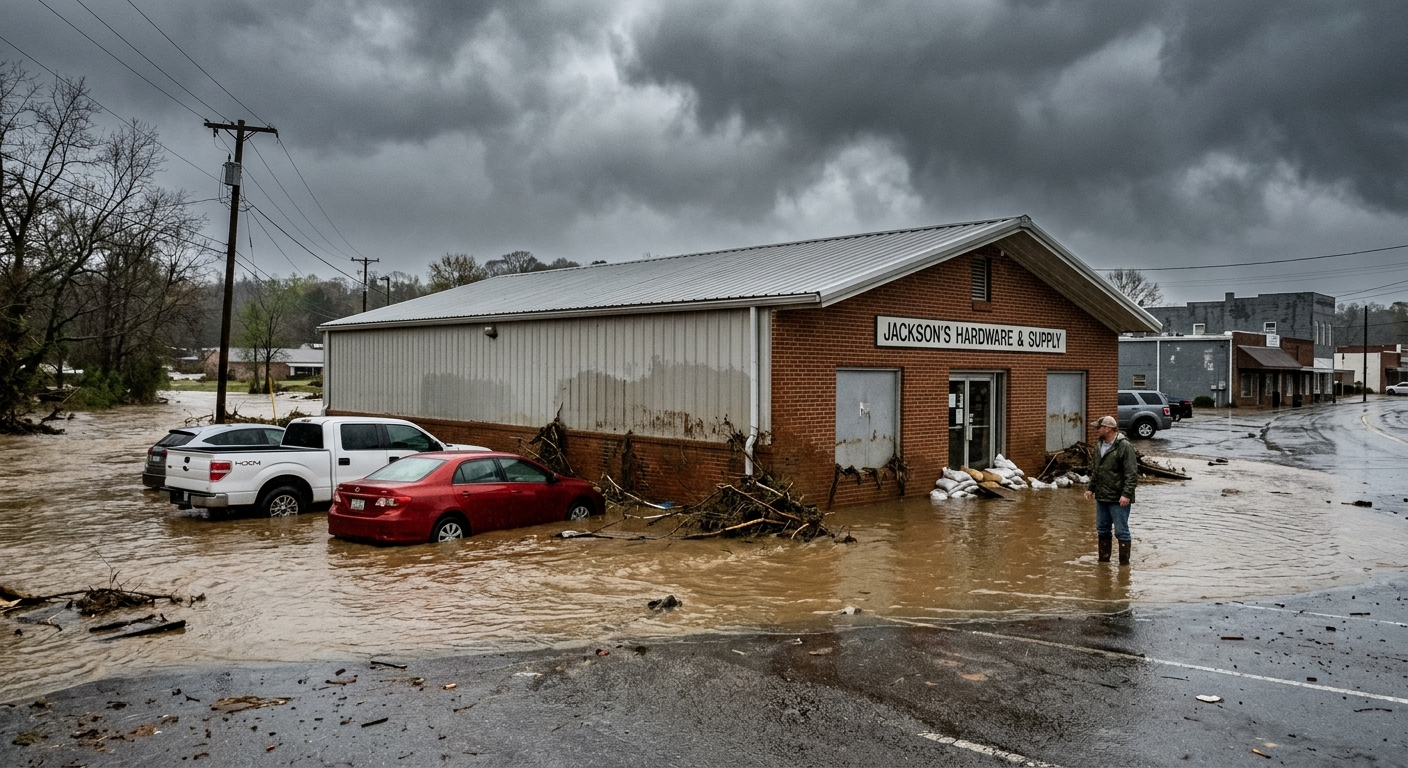
Surety bonds handle the guarantee side of your contractor obligations. But while the project is underway, the physical structure under construction also needs protection. Builders risk insurance covers the building itself, materials on site, and materials in transit against losses from fire, wind, hail, theft, and vandalism. In north Alabama, where spring severe weather can turn a framing project into a total loss overnight, builders risk is not something to skip.
If you want to understand how builders risk works alongside your other contractor coverages, the dedicated page on builders risk insurance explains the structure clearly, including when the owner versus the contractor is expected to carry the policy.
Commercial auto coverage for your work trucks, hired and non-owned auto for vehicles you or your employees drive but do not own, and an umbrella policy for larger contracts are other pieces of a complete contractor insurance program. The right combination depends on your trade, the size of your contracts, and who you are working for.
Get the right bonds and coverages in place with Akin and Associates
Akin and Associates is an independent insurance agency serving contractors and small business owners across north Alabama, including Decatur, Huntsville, Athens, Cullman, and the surrounding communities. Because we are independent, we are not tied to a single carrier. We compare rates and terms across multiple bonding companies and insurers to find the combination that fits your work and your budget.
Whether you need a license bond to get your contractor registration squared away, performance and payment bonds for an upcoming public contract, or a full commercial insurance program that pairs bonding with general liability, workers comp, and builders risk, we can walk through the requirements with you and get the paperwork moving.
Call us at (256) 355-8500 or visit our contact page to start the conversation. We work with contractors regularly and understand the bonding process from the bid stage through project closeout. Let us help you get bonded, covered, and ready to work.